
Cosmetic care
Cosmetic dentistry in London, ON
Small changes — a repaired chip, an evened edge, a closed gap — can make a big difference in how you feel about your smile. Our goal is a result that looks like you, only more confident.
Medically reviewed by Dr. Jimmy Chopra, DDS, General Dentist · RCDSO #503061 · Reviewed August 2026
Treatments we offer
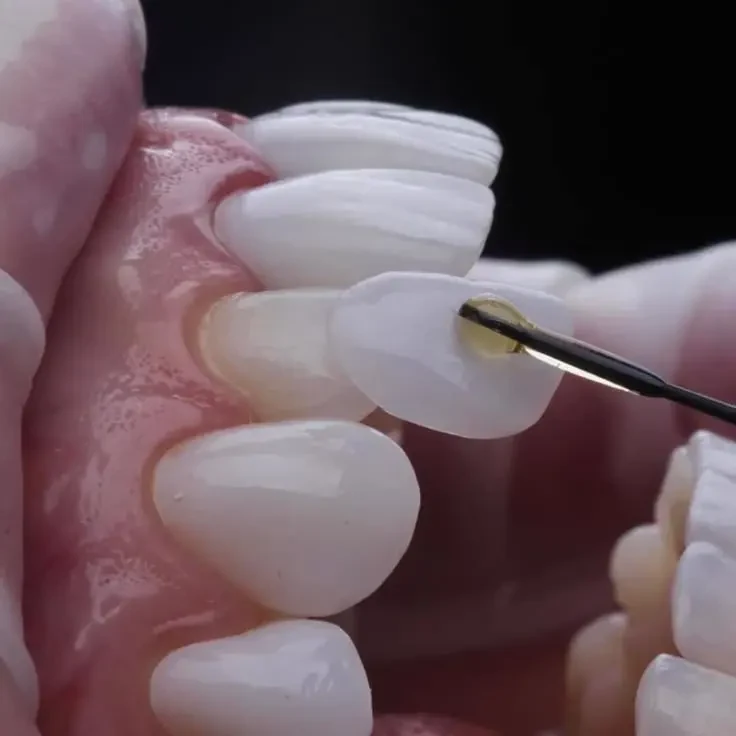
- Porcelain veneers — thin, custom shells that transform the shape, shade, and symmetry of front teeth.
- Composite bonding — a conservative, often single-visit fix for chips, gaps, and worn edges using tooth-coloured resin.
- Tooth reshaping — subtle contouring that smooths uneven edges and refines proportions.
- Whitening — see our dedicated teeth whitening page.
Our approach: conservative first
We always start with the least invasive option that can achieve your goal. Bonding and reshaping preserve nearly all of your natural tooth; veneers come into play when durability or a bigger change is called for. You’ll see and approve the plan — and understand the trade-offs — before anything begins.
Bonding or veneers — how to think about it
These two get compared constantly, and the honest answer is that they solve overlapping problems in different ways. Neither is simply better.
- Bonding is composite resin shaped directly onto the tooth, usually in a single visit. It removes little or no natural tooth, it costs less, and it can be adjusted or added to later. It is more prone to chipping and to picking up stain over time, and it will not last as long.
- Veneers are custom-made shells bonded to the front of the tooth over more than one visit. They hold their colour, resist staining and last considerably longer. They cost more, they require removing a thin layer of enamel, and that step is not reversible.
That last point is the one that matters most and gets glossed over elsewhere. Enamel does not grow back, so a tooth prepared for a veneer will need a veneer or a crown from then on. That is a reasonable trade for the right case and a poor one for a small chip that bonding would fix. We will tell you which yours is.
What to expect
Every cosmetic case starts with a conversation about what bothers you and what “better” looks like to you — because those are not always the same thing, and it is worth being specific. People often arrive asking for veneers when what is actually bothering them is shade, which whitening handles more simply and far more cheaply.
Then we examine your teeth, discuss realistic options, and map out costs and timing in writing. No pressure, no upselling — some of our best advice is “you don’t need that.”
Health comes first
Cosmetic work goes on top of a healthy mouth, never instead of one. Active decay and gum problems are treated first, because a beautiful veneer on an unhealthy tooth is a waste of your money. If you grind your teeth, that needs addressing too — grinding is one of the main reasons cosmetic work fails early, and a nightguard is a great deal cheaper than replacing a broken veneer.
Cost and insurance
Cosmetic treatment is elective, so most insurance plans do not cover it — and neither does the Canadian Dental Care Plan, which covers necessary care. Repairs with a genuine functional purpose, such as rebuilding a broken tooth, sometimes are covered. We will tell you honestly which category your treatment falls into rather than let you assume, and you will have costs in writing before deciding.
Common questions
Do veneers ruin your teeth?
They do not ruin them, but they do change them permanently, and that deserves a straight answer. Preparing a tooth for a veneer means removing a thin layer of enamel, and enamel does not grow back — so that tooth will need a veneer or a crown from then on. It is a reasonable trade for the right case. If your goal could be met with bonding or whitening instead, we will say so.
How long does cosmetic work last?
It varies, and it depends more on you than on the material. Veneers generally last considerably longer than bonding, but grinding, biting nails, opening things with your teeth and neglecting the gums will shorten either. Nothing here is permanent, and we would rather set that expectation at the start than have you feel let down in a few years.
Will it look obviously fake?
Only if it is designed to. The uniform, very white, very square look people picture is a choice, not an inevitability — and it is not the one we default to. Shape, shade and proportion are planned with you beforehand, and the aim is a result that looks like your teeth on a good day rather than someone else’s.
Should I whiten before or after?
Before, essentially always. Veneers and bonding do not change shade once they are made, so they are matched to the colour of your teeth at the time. Whitening afterwards would leave the new work looking darker than everything around it. Whiten first, let the shade settle, then match to it.
Can I see what it will look like first?
To a degree, and it is worth asking. Depending on the case we can show you the plan using scans and models so you understand the intended shape and proportion before committing. What nobody can honestly give you is a guaranteed picture of the finished result — teeth, gums and faces differ, and any preview is an illustration rather than a promise.
Related treatments
Cosmetic work usually pairs with something else.
- whitening — we usually whiten before matching new bonding or veneers.
- ClearCorrect aligners — moving a tooth can beat covering it.
- repairs — for chips where a simple fix is the honest answer.
Not sure which applies to you? Book a visit and we’ll talk it through, or read what to expect at a first visit.